In the age that we currently live in it’s easy to see the increasing quality that
display media has experienced. HD TVs are now commonplace and usurp their
predecessors, CRT displays, with such veracity that it’s difficult to believe we ever
settled for less. Indeed, with 4K resolution on our doorsteps in display and
projection technologies, one has to wonder, what lies beyond that realm and, to
quote the now trite adage: “what will they think of next?’
Well, they’ve already thought of it. 3D has come back in style in the last few years
and this is evident in the slew of 3D movies that have occupied our theatres and in
the proliferation of 3D HD TVs we can now enjoy in our home. However the
drawback to this type of 3D technology has always been a loss in luminosity and the
need to wear those pesky glasses, which reduces it to more of a fad that seems,
thankfully, to be passing. However, there is another kind of technology under the
“3D’ umbrella that is a pleasure to view – without any loss in luminosity or requiring
any glasses – and actually astounds the senses at the sheer realism of it all.
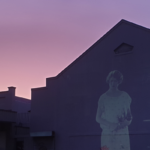
I am talking about 3D holographic projection. Anyone remember the “resurrection’
of Tupac Shakur at Coachella festival a few years ago? Well, the company behind
that, hailing from the UK, is called Musion 3D and they have come to our shores
under distribution of Musion Africa, run by CEO Ellen van den Burg and Chico De
Almeida. Musion aims to change the way we view and interact with media of all
sorts in the entertainment, corporate, educational, political, digital resurrection and
even the TelePresence sectors by bringing 3D holographic projection to the fore.
Musion Africa recently installed a system in the Mardi Gras Theatre at Carnival City
to showcase the technology and is involved in other campaigns and installations
both locally and in other locations around the continent including at the Mozambique
National Stadium. The system at Carnival City was installed by local AV experts
System Solutions, a Gearhouse Group company.
A bit of background
Musion as a technology has its origins in 1996 when it was developed and installed
at the Swarovski Museum in Austria. The inventor of the technology, Uwe Maass,
founded a laser show company in 1988 through his experience in the live events
industry in Germany and in 1992, through his affinity for 3D technology, he invented
the first polarised 3D laser projector. However, his dissatisfaction with the use of
those aforementioned pesky glasses, Maass founded Musion 3D in 1997 following
the Swarovski Museum “pilot’ and once again constructed their first Eyeliner – the
technology used to resurrect Tupac Shakur at Coachella – for Swarovski.
The Eyeliner is, essentially, the modern version of an old Victorian-era theatrical
illusion called “Pepper’s ghost’. The trick has been used in theatre, haunted houses,
dark rides and magic shows for centuries and has its primordial origins in the 16th-
Century under Neapolitan scientist and scholar Giambattista della Porta. Della Porta
is also credited with the invention of camera obscura, an optical device that led to
the invention of photography and the camera.
Pepper’s ghost, named after John Henry Pepper – the man who popularised the
effect – uses plate glass, Plexiglass or plastic film and special lighting techniques to
create the illusion of objects appearing or disappearing, becoming transparent or to
make one object morph into another. The objects are most often placed in a hidden
room called a “blue room’ where they are lit and reflected off of the glass, creating
the impression of a ghost or hologram.
A famous example of this technique in action is the world-famous Haunted Mansion
rides at Disneyland, Walt Disney World and Disneyland Tokyo. In those cases the
glass is vertically orientated in relation to viewer. Animated props are then
reflected below and above the viewer which creates the illusion of three-
dimensional, luminous “ghosts’ that seemingly dance through the ballroom and
interact with physical props on the ballroom floor. The key is that the light
reflected on the props causes the ghosts to appear and disappear.
This, in essence, is the way Musion’s technology works albeit without the need for
props or a hidden room because a permanently mounted HD projector is used as a
programme source. The projector is usually mounted above the stage and is aimed
at a “bounce screen’ (a custom-made, white cinema-type screen) installed into the
stage floor where an inverse video of the material is projected. Musion’s patented,
translucent foil is then rigged at a 45 degree angle across the stage and the content
projected onto the bounce screen is reflected in the foil, giving the illusion of a 3D
hologram. The higher the resolution of the playback video: the higher the
resolution of the hologram. With the inclusion of some clever back-lighting, the
result is a completely undetectable 3D holographic performance that seems to defy
reality and, with modern CGI effects, the constraints of physics as well.
Carnival City – Mardi Gras Theatre
Musion SA has been driven by Ellen van den Berg, a passionate and enthusiastic
entrepreneur who is very excited about the product because it holds so many
opportunities in so many sectors. Indeed, it could revolutionise the way we view
and interact with display media.
Van den Berg contacted Roger Feldmann from local AV experts System Solutions
who then teamed up with Musion to supply the correct equipment specification for
the installation at Carnival City’s Mardi Gras Theatre. Feldmann then brought in
local lighting experts DWR to supply the lighting and truss and our local Christie
representatives, who supplied the projector.
Starting on the stage, the bounce screen is an 11.8m x 3m, non-perforated web and
eye Stagelite Contrast screen. This is mounted in a triangular Prolyte H30D truss
frame on the floor of the stage and is out of view of the audience by a blackened
border because obviously it is undesirable to give away any secrets of the
technology during the performance.
The foil screen is oriented at 45 degrees in relation to the stage, is 12m wide by 4m
high and is framed by Prolyte H40V truss. The foil is Musion’s proprietary design
and is virtually undetectable in low-lighting theatre conditions. In fact, I would say
given that the rest of the equipment is virtually standard such as the bounce screen
and the truss, it is the foil which provides the “magic’ of the illusion.
The projector spec’d was a Christie Roadster HD20KJ, mounted in a box of Prolyte
H30V truss 6.3m above the stage.
Playback equipment consists of an Avstumpfl Wings Engine Install Dual in a 19′, 4U
rack-mount multi-display video server. This runs Wings Vioso projector mapping
software, Wings Touch interactive user interface creation software and AVIO
manager, Wings’ network protocol.
The rest of the supplied equipment is lighting, to add ambiance and flair to the 3D
holograms. This brings an air of “liveness’ to the show and bumps up the realism a
notch for showmanship’s sake. In summary, the lighting fixtures include eight Robe
MMX Spots, eight Robe Robin 300 LED Washes and eight Robe Robin LED Beam
100s.
The wrap
When I was a child I was lucky enough to be taken to Walt Disney World in Florida
by my parents. I still remember standing in that endless queue for the Haunted
Mansion ride and when my eyes finally fell upon the “ghosts’ dancing on the
ballroom floor, my mind was perplexed at how this was possible. Little did I know
that a good 20 years down the line this trick would be drastically revolutionised in
the form of what we see today in technologies such as Musion 3D. The key here is
that as projection technology has progressed to offer such definition and quality to
the point that these new ideas can be recreated and refined for a viewer experience
at a level never before conceived. Viewing the results for myself was just as
perplexing to my modernised mind and I’m sure the technology will find its way into
many sectors in the near future.