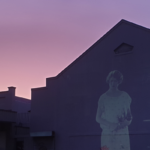
Nestled in the highlands of eastern Mpumalanga near Lothair and about 50km from
the border of Swaziland, one of South Africa’s most quaint and special festivals
takes place: Mieliepop.
If you’ve ever been to other festivals out in the South African wilderness, such as
Oppikoppi, you’ll know that they’re not for sissies. The conditions are often hot,
harsh and dusty and this can take its toll.
However, Mieliepop is quite different and that’s what makes it special. You camp
out on manicured lawns, there is no dust, the weather is idyllic, natural rock
formations and waterfalls abound and a river divides the festival in two upon which
festival goers can enjoy a barge cruise, fishing and swimming, if they so desire.
There is also a heated swimming pool, opportunities for hiking and the main bar is
located in a hollowed out rocky grotto. All of this, plus enjoying what the festival is
all about – good local music – makes its allure undeniable and the experience
supremely pleasant.
Another great thing about Mieliepop is its size. You’re not overrun by swarms of
people and that claustrophobic feeling of restrictive movement. There are wide
open spaces and everyone seems happier than usual. There is plenty to eat and
drink and ablution and shower facilities abound so you get around that dirty feeling
as well.
In the main entertainment area there are two areas of music appreciation: the
main stage and the dance floor, which is also located in a hollowed out rock grotto
next to a natural waterfall. The audience area in front of the main stage is soft and
grassy and you’re never wanting for space. The overwhelming sense is of
simplicity, which is refreshing.
J-Sound Productions, headed by Jan Haarhof, was the sole company involved with
supplying the technical requirements for the festival. Haarhof and J-Sound have
had a long relationship with Mieliepop going back to the beginnings with their
relationship with Mieliepop festival director Coenraad Nel.
“Since the first show I worked on with Coenraad we dreamed of running our own
festival. As good friends we attended almost every festival in the country and a few
overseas. We had this dream venue in the Cape at one stage that we wanted to
develop with an old colleague of ours, Willem Visser. In fact, many of the readers
will remember the legend. But those dreams came to an end with him passing in a
bad motorcycle accident. We wanted something different though – slightly off beat
from the regular camp in the dust fest with a little more glitter for the more
matured festival goer and always great on the musical side of things. Only a few
years later we discovered the venue that would host Mieliepop as it is today. With
Uriah Heep and Men Without Hats entertaining the crowds in previous years the
future is looking exciting for this new wave fest!’
The main stage
Since the dance floor was a simple system comprising a couple of powered
speakers with a DJ setup, the main stage was the central point of attraction at the
festival and is worthy of explanation.
The stage structure was constructed out of 24 Prolyte 2m x 1m stage decks on
900mm legs, a 3m x 2m drum riser and a Trustt 135 degree custom roof system
measuring 8m (w) x 64m (d) x 5m (h).
“The stage structure we used is such an easy system to work with and expandable
beyond our wildest imaginations,’ remarks Haarhof.
The audio system for the main stage is entirely JBL and centres on a SRX700
system. In total, there were eight SRX725 dual-15-inch point source enclosures
configured as four per side and eight SRX728 dual-18-inch subwoofers, also stacked
four per side, all powered by Crown I-Tech 6000 and 4000 amplifiers. The console
of choice was a Soundcraft Si-series digital consoles that handled FOH and on-stage
monitoring, which comprise JBL EON XTs.
“Although not a line array this old school point source array is one of my favourite
all round systems and is a workhorse like no other. It’s clear, well balanced and if
setup is done correctly it delivers enough punch for a small to medium crowd,’ says
Haarhof.
Lighting on the main stage comprised a mix of various lights from various
manufacturers. As Haarhof puts it, there was an “exciting mix’ of:
• Chauvet LED 350 beams
• Chavet Core 3×1
• Chauvet Beambars
• Martin MAC401s
• Versalite LED par cans
• 1080×768 8mm LED panels
• Stagg Headbangers
The lighting rig was controlled with Show X-press, Lightjockey and Resolume while
Geyser smoke machines handled hazing.
“As we are very short on power we really rely on the led fixtures for effects and
visibility,’ explains Haarhof. “Every year I’m surprised by the brightness versus
power consumption!’
With any festival, especially new festivals that are trying to make a name for
themselves and navigate through the trials that come with the territory, there are
always challenges.
Haarhof outlines a few of these: “From a technical perspective it was mostly to
squeeze everything into a limited budget with little sponsorship and with little
finance. For a young festival the sponsors are only noticing the niche festival that it
is now and are starting to bite for next years’ fest. We (JSP) have been running the
technical side for the past four years with the help of a few friends we’ve always
made it work in sometimes difficult circumstances. But we believe in this fest and
we have passion for what we do.
“On the logistical end: toilet paper and showers! It is quite a challenge to setup
infrastructure in a place that is only starting to develop as a festival grounds and to
cater for more people than you bargain for. It’s like a snow ball effect – with more
people you need more water, more pumps, more electricity, more cleaners, etc. I
think we’ve got the hang of it now and it will only get better in the coming years
with more permanent infrastructure going up!’
The wrap
After experiencing Mieliepop for myself this year I kicked myself for turning down
the opportunity to go in 2013. When you pull over that ridge after a three-hour
drive and peer down into the grassy valley your first impression that it is paradise
and you feel you’re in for a treat. The small crowds (for now) and their happy vibe
are infectious and when it was finally time to go, it wasn’t easy. Regardless of the
fact that Haarhof admits that the main stage doesn’t have a line array is of little
significance. The music and the people are enough. The JBL SRX700 system did
more than enough to keep the good times rolling and in combination with the
surrounds, will keep people coming back.
“This is a fest to keep your eye on,’ concludes Haarhof. “In four years it achieved
what other festivals do in eight and it will continue to grow in all kinds of
“differentness’ and explorations of tastes and sounds. The music experience is so
vast that it serves a wide spectrum of music lovers. And it all happens in a very
pleasurable venue to take it all in.’
Agreed.